✅ Last checked on
In today’s interconnected world, email communication has become an integral part of our personal and professional lives. Behind the scenes of every email we send lies a crucial protocol that ensures its smooth delivery: Simple Mail Transfer Protocol (SMTP).
In this guide, we’ll delve into the SMTP Protocol Overview: Understanding Simple Mail Transfer Protocol.
We’ll explore its core concepts, functions, components, and the role it plays in enabling seamless email communication across the globe.
SMTP Protocol Overview: Understanding Simple Mail Transfer Protocol
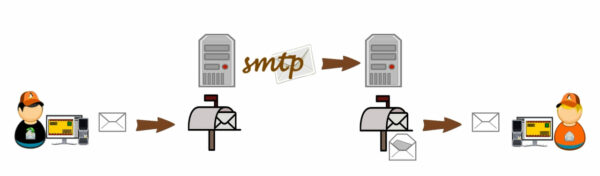
Simple Mail Transfer Protocol (SMTP) is a cornerstone of electronic mail communication. It acts as a reliable and efficient method to transmit emails from the sender’s email server to the recipient’s email server.
SMTP is designed to work with various email clients, making it a universal solution for sending and receiving emails.
Key Components of SMTP
SMTP operates using a client-server architecture, involving three main components: the sender’s email client, the sender’s SMTP server, and the recipient’s SMTP server. Let’s take a closer look at each:
- Sender’s Email Client: The process begins with the sender drafting an email using their email client (e.g., Outlook, Gmail). The email client communicates with the sender’s SMTP server to initiate the email’s transmission.
- Sender’s SMTP Server: Upon receiving the email from the client, the sender’s SMTP server takes charge. It establishes a connection with the recipient’s SMTP server and transfers the email for further processing.
- Recipient’s SMTP Server: The recipient’s SMTP server receives the incoming email from the sender’s SMTP server. It then stores the email until the recipient fetches it using their email client.
How SMTP Works
SMTP operates on a set of rules and commands that guide the transmission process. When the sender initiates an email transfer, the SMTP server follows a series of steps to ensure successful delivery:
- Handshake: The sender’s SMTP server establishes a connection with the recipient’s SMTP server. This connection is known as a handshake.
- Command Exchange: The sender’s server issues commands to the recipient’s server, such as initiating email transmission, specifying sender and recipient information, and checking for compatibility.
- Message Transfer: The actual email message is transferred from the sender’s server to the recipient’s server using a series of data packets.
- Confirmation: After successful transmission, the recipient’s server sends a confirmation to the sender’s server, indicating that the email has been received.
- Delivery: The recipient’s server stores the email until the recipient retrieves it through their email client.
Importance of SMTP
SMTP’s importance lies in its role as the backbone of email communication. It ensures that emails are reliably delivered across networks, regardless of the email clients or servers used. Without SMTP, the process of sending and receiving emails would lack consistency and standardization.
FAQs about SMTP Protocol
What Is SMTP’s Role in Email Communication?
Can I Use SMTP for Sending Bulk Emails?
Is SMTP Secure?
Are There Alternatives to SMTP?
How Does SMTP Prevent Email Loss?
What’s the Difference Between SMTP and SMTP Relay?
Conclusion
In the realm of modern communication, SMTP Protocol serves as the unsung hero that enables the seamless transfer of emails across the world. Understanding its functions, components, and importance gives us insights into the inner workings of email communication.
The next time you send or receive an email, remember that SMTP is working diligently in the background to make it happen.